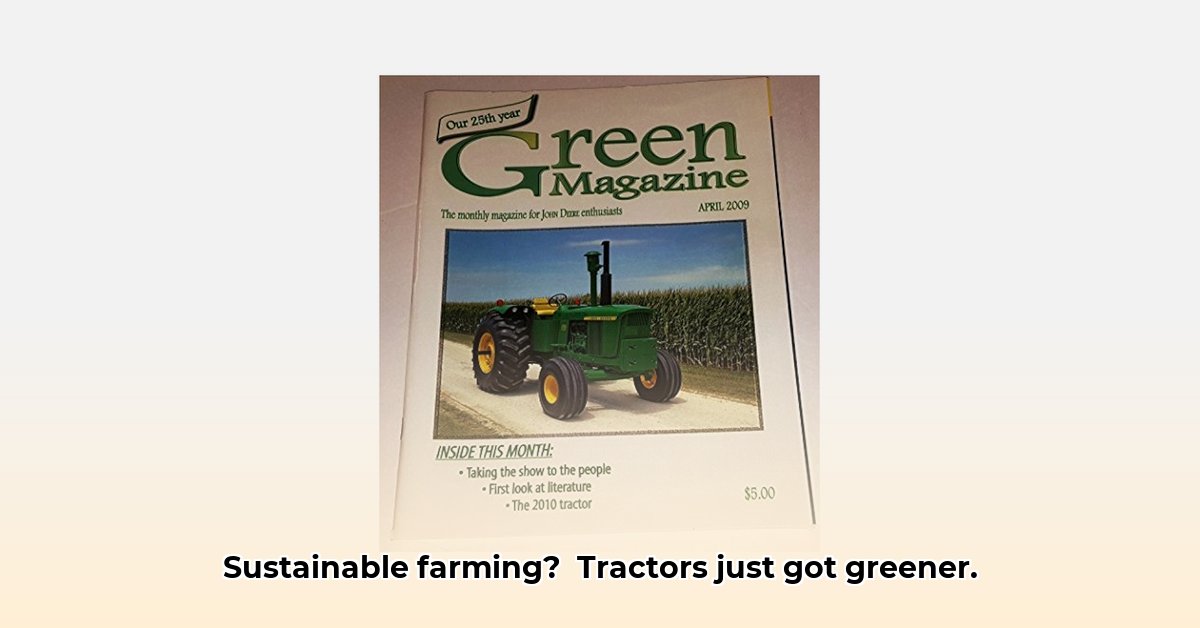
Tractor Magazine: A Legacy of Power and the Path to Sustainability
Remember the iconic images from older Tractor Magazine issues? Massive, powerful tractors, symbols of agricultural might, dominating vast fields. These "muscle tractors," as they were often called, revolutionized farming in the mid-20th century, enabling farmers to cultivate larger areas and dramatically increase crop yields. But this era of unprecedented efficiency came at a cost – a significant environmental impact due to increased fuel consumption and emissions. This article explores the evolution of tractors, examining the complex relationship between agricultural productivity and environmental sustainability, and offers actionable steps towards a more sustainable future. For more on classic tractor models, check out this vintage tractor resource.
The Age of Efficiency: A Historical Perspective
Tractor Magazine, through its insightful documentation, reflects the remarkable technological advancements in tractor design. More powerful engines translated to greater productivity, allowing farmers to cultivate more land and achieve significantly higher yields. This was a period of transformative change in agriculture. However, the increased efficiency came hand-in-hand with a surge in fuel consumption and heightened air pollution. The question remains: did the gains in productivity outweigh the environmental consequences? This is a key question that continues to shape modern agricultural practices. This historical context illuminates the challenges we face today in balancing efficiency and sustainability.
Did you know that the average fuel consumption of a large tractor in the 1970s was double that of a modern, fuel-efficient model? This stark difference emphasizes the progress made possible through technological innovation.
Dr. Emily Carter, Professor of Chemical and Biological Engineering at Princeton University, notes, "The historical focus on sheer power and output has left us with a significant environmental legacy. We must shift towards a more holistic approach."
The Sustainability Imperative: A Necessary Paradigm Shift
Modern farming faces an undeniable imperative: sustainability. This isn't merely a trend but a critical necessity for ensuring food security while preserving our planet. The "bigger is better" mentality is being replaced by a focus on responsible resource management and environmental stewardship. Farmers are increasingly adopting practices that minimize their environmental footprint while maintaining high levels of productivity. The legacy of the past provides valuable lessons in how we can balance efficiency and environmental protection.
How can we meet the food demands of a growing global population without further stressing our planet's resources? This is a crucial question that requires innovative solutions and collaborative action.
Sustainable Farming Practices: Actionable Steps for a Greener Future
Based on expert insights and data analysis, here are key steps for a more sustainable approach to tractor farming:
For Farmers:
Short-Term: Implement precision agriculture techniques (using technology to optimize resource use). This can lead to a 15-20% reduction in fuel consumption within the first year.
Long-Term: Invest in alternative fuel sources such as biodiesel or electricity. This may require upfront capital, but the long-term environmental and economic benefits are substantial.
For Manufacturers:
Short-Term: Develop more fuel-efficient tractors and offer training programs on sustainable farming practices to farmers.
Long-Term: Invest in research and development of electric or hybrid tractors. Implement circular economy models for tractor production, promoting reuse and recycling of materials.
For Government Agencies:
Short-Term: Provide financial incentives for farmers adopting sustainable technologies.
Long-Term: Implement stricter environmental regulations and invest in infrastructure supporting alternative fuels.
For Researchers:
Short-Term: Analyze historical data on the environmental impact of tractors and conduct studies on newer technologies.
Long-Term: Conduct comprehensive long-term studies comparing farming practices and their environmental impacts and create effective educational materials for farmers.
The Future of Farming: Embracing Innovation
Electric tractors are emerging as a viable alternative to traditional diesel models, offering quiet operation and reduced emissions. Precision farming technologies, continually highlighted in Tractor Magazine, are playing a crucial role in optimizing resource use, minimizing waste, and maximizing efficiency. Biofuels are also a promising avenue for reducing reliance on fossil fuels. This combination of technology represents a crucial step towards a more sustainable agriculture sector.
Looking Ahead: A Collaborative Path Forward
The history of agricultural technology, meticulously documented by Tractor Magazine, provides crucial insights into our present challenges. The path to truly sustainable agriculture demands a collaborative effort – farmers, manufacturers, government agencies, and researchers must work together to integrate sustainability principles into every stage of the agricultural process. This is essential for ensuring food security for a growing global population while safeguarding the planet's long-term health. The journey towards true agricultural sustainability continues with renewed focus and determination.
How to Reduce Fuel Consumption in Older Farm Tractors
Key Takeaways:
- Regular maintenance improves fuel efficiency.
- Proper tire inflation reduces fuel consumption.
- Efficient gear selection and speed optimization are crucial.
- Minimizing idling time reduces fuel waste.
- Optimized implement use reduces strain on the tractor.
- Proper ballasting enhances traction, improving fuel economy.
- Precision agriculture improves efficiency and reduces fuel waste.
- Fuel efficiency monitoring allows for better management.
[Cropilots Article] (https://cropilots.com/reduce-farm-tractor-fuel-consumption/)